
Deities of the Peedam
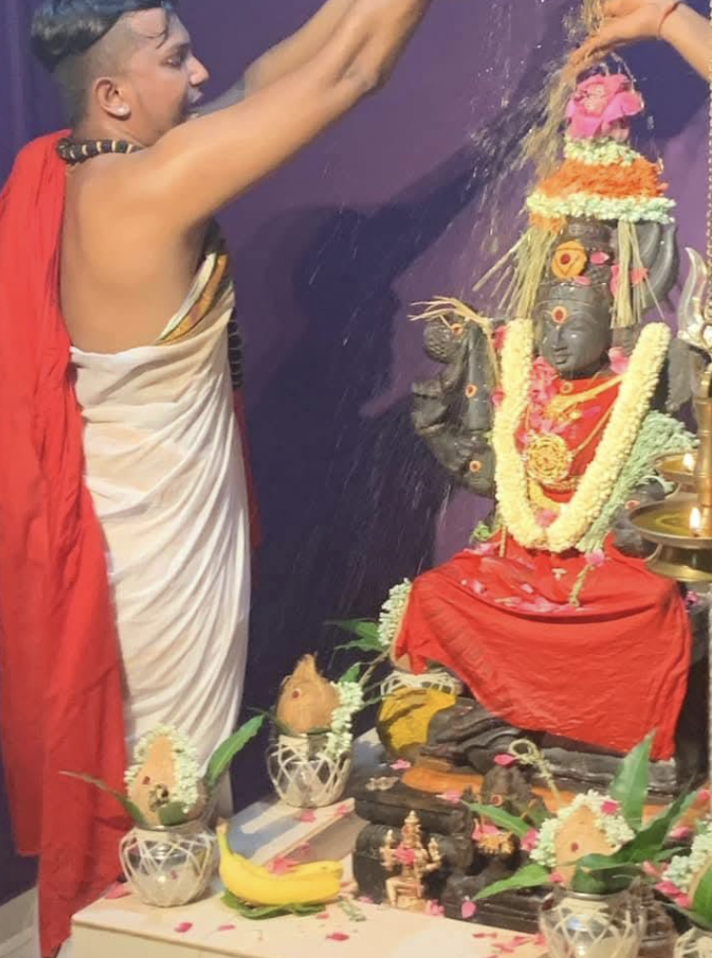
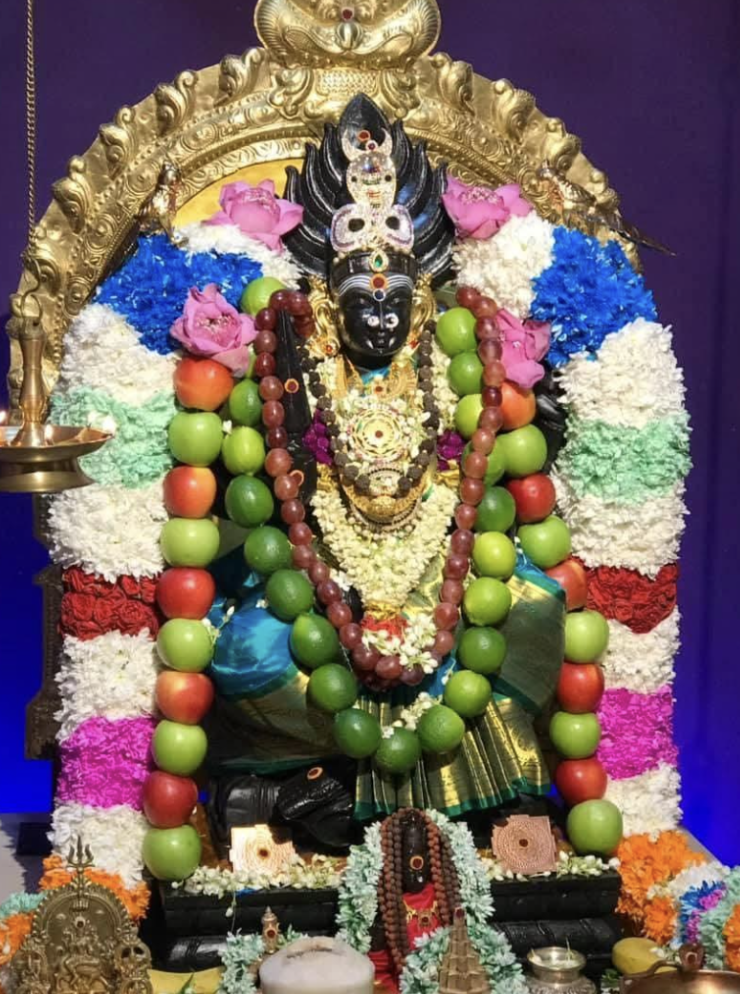
Sri Sahasrāksi Caitanya Mahāmāri
Is the presiding deity of Simhapurī Śrī Mātṛkā Śakti Peedam. Revered by devotees for Her boundless compassion and motherly grace, the Divine Mother welcomes all who seek Her blessings with a gentle and radiant smile.
The murti was specially commissioned by Anna from Mahabalipuram, India, renowned for its master stone sculptors. It took approximately four months to meticulously carve this magnificent three-foot granite image before it was brought to Singapore and consecrated by him.
The Devi possesses several unique iconographic features that distinguish Her from conventional South Indian depictions of the Goddess. Most notably, she bears a vertical tilakam rather than the customary round pottu, signifying Her identity as Śrī Rājarājeśvarī, the Supreme Queen of the Universe. In addition, a sacred trikoṇa (triangle) is intricately carved at Her navel, with the navel itself representing the Bindu. This profound symbolism signifies Her as the source and womb of the three worlds (Triloka) and the primordial Mother from whom all creation emerges.
To further invoke and establish the Divine Presence, Anna has installed a powerful Śrī Yantra crafted in gold beneath the sanctum. Prior to its installation, extensive japa sādhana and homa rituals were performed to energise and awaken the yantra according to traditional Śrī Vidyā practices. The consecrated Śrī Yantra serves as the subtle spiritual heart of the shrine, radiating the Divine Mother's grace and blessings to all who come before Her.
Through Her presence, devotees are reminded of the Divine Mother's infinite love, protection, and supreme wisdom, guiding sincere seekers towards both Bhoga (worldly prosperity and fulfilment) and Mokṣa (spiritual liberation).
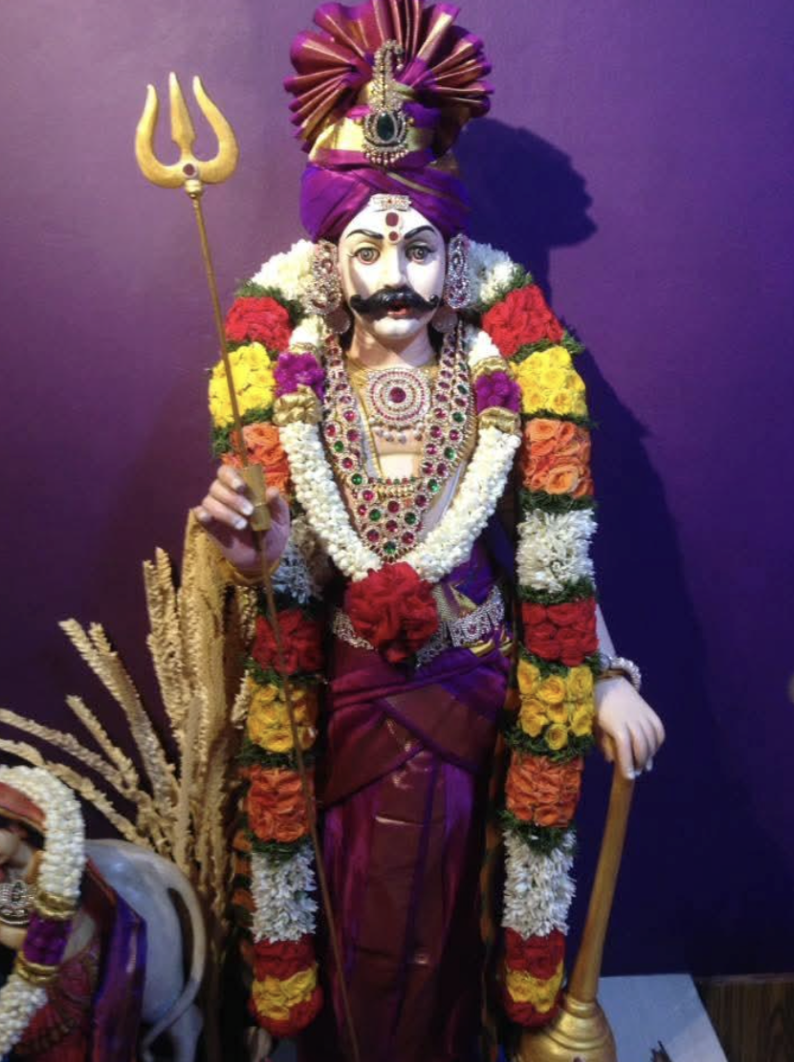
Sri Rudra Bhairava Munisvaran
Is the ancestral deity of Anna and has been established at Simhapurī Śrī Mātṛkā Śakti Peedam as the Kṣetra Pālaka (Guardian Deity) and protector of the Peedam. Revered as a powerful manifestation of both Rudra and Bhairava, Sri Rudra Bhairava Munisvaran embodies the fierce, protective, and transformative aspects of the Divine. His energy is primal, direct, and uncompromising, safeguarding the sanctity of the Peedam and its spiritual activities.
Within the Peedam, Sri Rudra Bhairava Munisvaran is positioned directly opposite Mahākālī, symbolising the harmonious balance of powerful protective and transformative energies within the sacred space.
According to Anna, the worship of Sri Rudra Bhairava Munisvaran has been preserved through his family lineage for generations. The deity's origins trace back to Thanjavur, Tamil Nadu, India, where Anna's grandfather was born. His grandfather was widely known as a spiritual healer blessed with extraordinary siddhis and was deeply devoted to the worship of Munisvaran. Through this ancestral connection, the sacred tradition of venerating Sri Rudra Bhairava Munisvaran has continued to this day.
Over the years, Anna has shared many profound spiritual experiences connected to Sri Rudra Bhairava Munisvaran. In particular, he has spoken about instances where the deity's presence was tangibly revealed during the annual Paḍaiyal Pūjā, a sacred offering ceremony performed in honour of the ancestral deity. These experiences have further strengthened Anna's devotion and conviction in the protective grace and living presence of Sri Rudra Bhairava Munisvaran.
As the guardian deity of the Peedam, Sri Rudra Bhairava Munisvaran continues to watch over devotees, protect the sacred premises, and remove unseen obstacles, ensuring that spiritual seekers may pursue their path under his vigilant care and blessings.
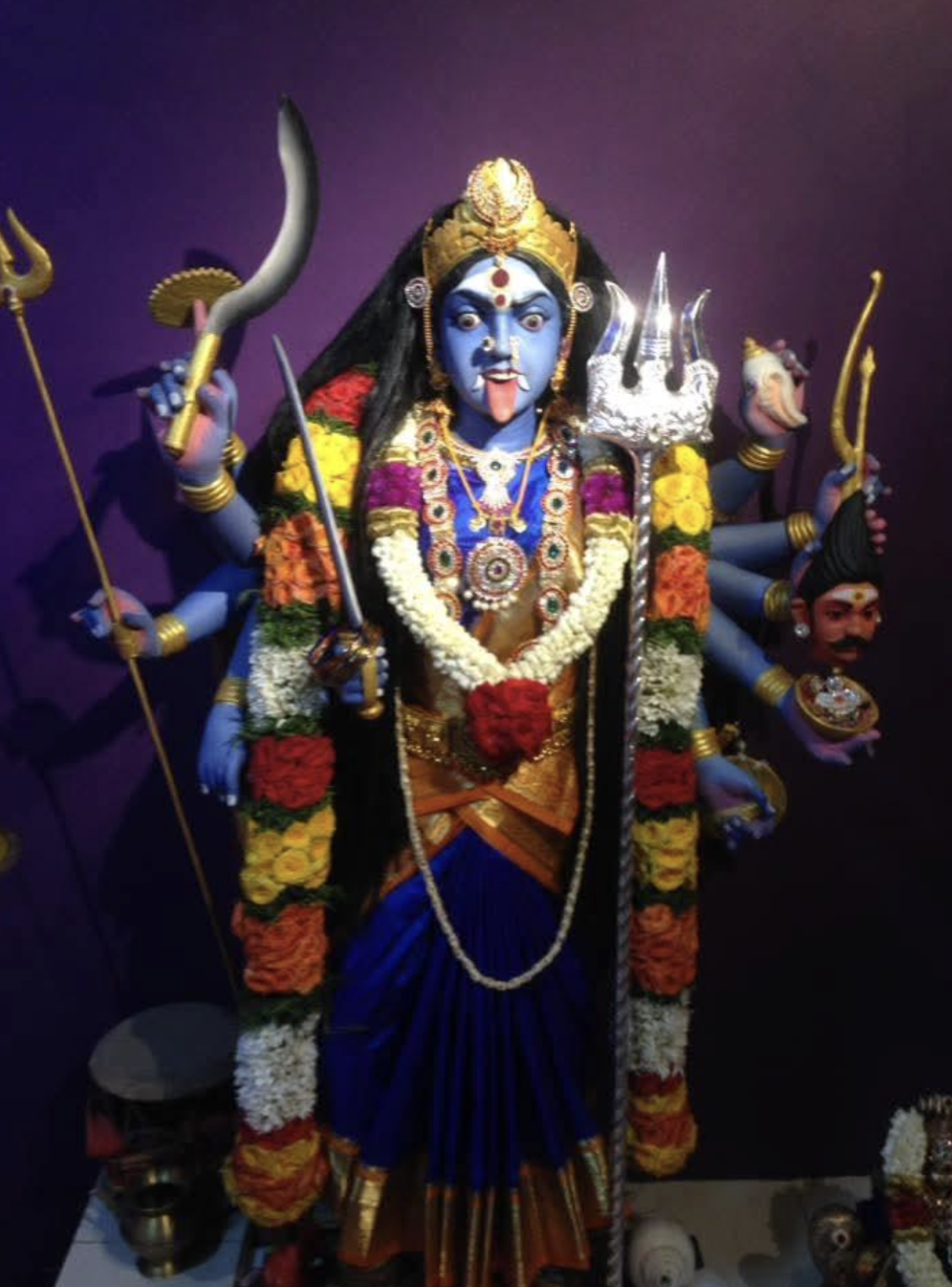
Sri Mayāna Bhadrakālī
Is a fierce yet infinitely compassionate form of the Divine Mother who entered Anna's life during his teenage years. His devotion to Kālī began after reading about the life and teachings of Sri Ramakrishna Paramahamsa, whose unwavering love and surrender to the Divine Mother deeply inspired him.
One day, while visiting a temple in Singapore, Anna came across an image of Kālī that had been abandoned and discarded by a former devotee. Moved by compassion, he sought the Divine Mother's permission and reverently brought Her home, offering Her a place of worship and care. What began as a simple act of devotion soon blossomed into a profound spiritual relationship with the Mother, and over the years, his devotion to Kālī grew immensely.
As an expression of his gratitude and reverence, Anna later commissioned a skilled sthapati to carve a beautiful three-foot murti of the Goddess. She was subsequently installed in the Peedam as Sri Mayāna Bhadrakālī, the Divine Mother who presides over the cremation grounds and liberates souls from the bondage of ignorance and illusion.
In a unique alignment, Sri Mayāna Bhadrakālī is positioned so that she faces geographically towards a distant burial ground opposite the Peedam. This sacred placement reflects Her traditional association with the cremation grounds, where She is revered as the destroyer of ego, the remover of Māyā, and the bestower of Mokṣa. While Her form may appear fierce, devotees experience Her as a loving and protective Mother who guides sincere seekers towards spiritual awakening and liberation.
Anna often shares a profound observation regarding the Goddess's posture and gaze. Unlike many deities whose eyes appear to look directly at the devotee, Sri Mayāna Bhadrakālī's gaze is directed downward. He explains that this symbolism teaches humility. To truly receive Her grace, one must approach Her with surrender and reverence. When a devotee humbly kneels before Her, their eyes meet Hers directly, signifying the moment when the Divine Mother's grace descends upon the sincere seeker.
For Anna, Sri Mayāna Bhadrakālī is not merely a deity enshrined within the Peedam, but a living presence who has guided, protected, and transformed his spiritual journey. Through Her boundless compassion, she continues to remove obstacles, dissolve illusion, and lead devotees towards the ultimate truth.