
Our Guru Lineage
Dakshinamoorthy
Dakṣiṇāmūrti is revered as the first Guru who passed down the divine wisdom of Śrī Vidyā to our lineage. As the 725th nāma of the Lalitā Sahasranāma, “Dakṣiṇāmūrti-rūpiṇī,” suggests, He is not different from the Divine Mother Herself. He is understood as the Jñāna-rūpa — the embodiment of wisdom — of Śiva-Śakti.
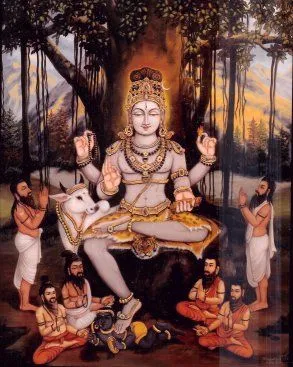
Dattātreya
Dattātreya is believed to be the incarnation of Brahmā, Viṣṇu, and Rudra. He was born to Ṛṣi Atri and Anasūyā Devī. The importance of the Guru was imparted through the sacred text Guru Gītā. Advaita and Śrī Vidyā have also been transmitted through various texts such as the Avadhūta Gītā and Datta Saṁhitā.
“The Supreme Guru in our line is Dattātreya, who has written 11,000 Upaniṣads, and who has given to the world 7 crores of Mahāmantras; so He is the Mantra Śāstra.”
— Śrī Amṛtānandanātha Sarasvatī
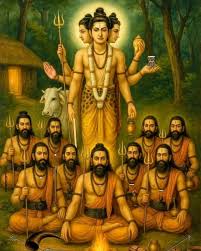
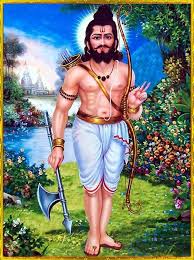
Paraśurāma
Paraśurāma is revered as one of the Daśāvatāras of Mahāviṣṇu and is also one of the seven Cirañjīvīs, the immortal beings. He was born to Reṇukā Devī and Ṛṣi Jamadagni. As a Kṣatriya Ṛṣi, He broke conventional norms and showed that spirituality can coexist with worldly life. He is credited with composing the Paraśurāma Kalpa Sūtra, one of the primary texts that details the complete Śrī Vidyā Pūjā Paddhati.
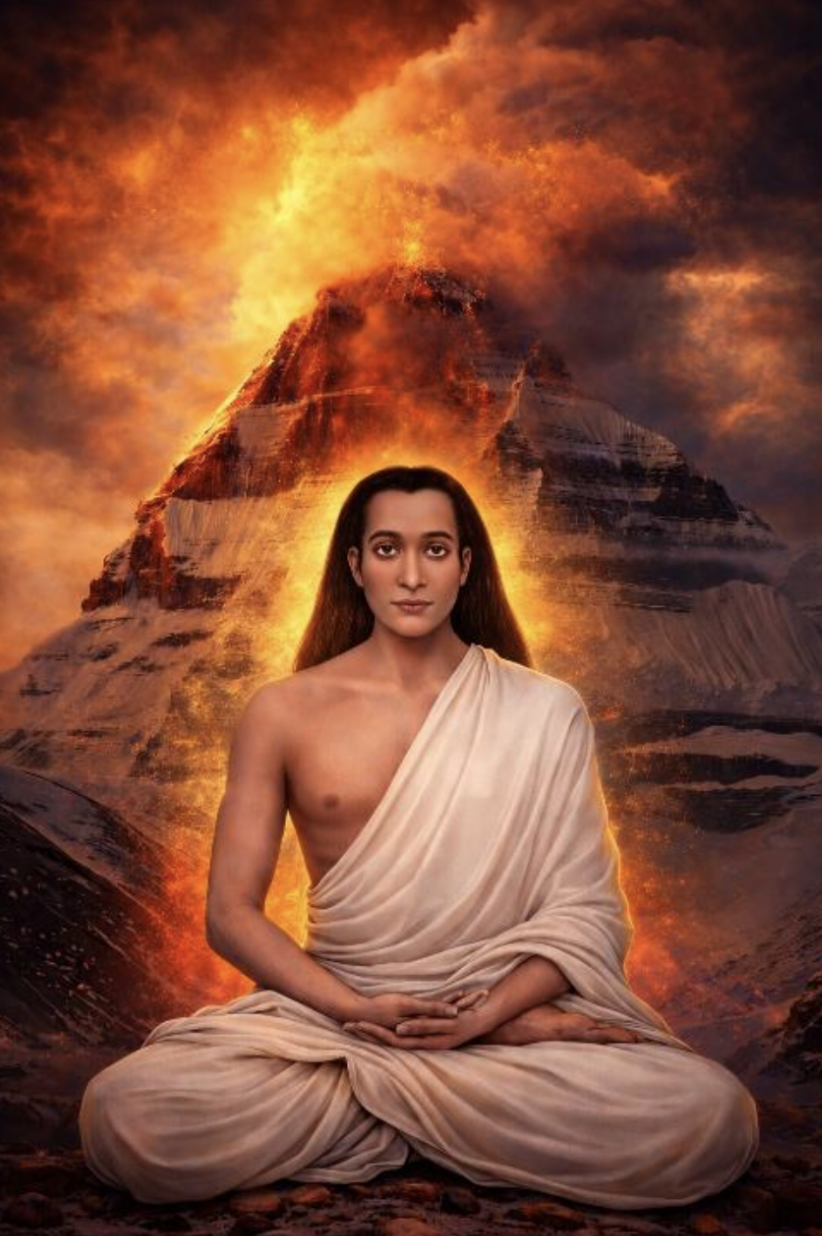
Katambari Bābā / Mahāvatar Bābājī
Aiya has explained that the Kriya Bābājī mentioned in the spiritual lineage of Kriya Yoga is part of the same Guru tradition from which his own lineage descends. He noted that while many people are familiar with Mahāvatar Bābājī through the teachings of Paramahansa Yogananda and the book Autobiography of a Yogi, there are differing views regarding Bābājī's age and history.
According to Aiya, teachings received through his Guru Paramparā indicate that Mahāvatar Bābājī's existence extends far beyond commonly cited accounts. He has shared that his lineage traces through several revered Gurus, ultimately leading back to Jagadguru Śrī Kaṭambari Bābā.
Aiya further stated that Kaṭambari Bābā and Mahāvatar Bābājī are regarded as one and the same being within his lineage tradition. From this common spiritual source, the teachings evolved into different streams: one becoming known as Kriya Yoga, while another continued through the path of Śrī Vidyā. Although these traditions may appear distinct externally, they share a common spiritual origin according to the lineage teachings passed down through his Gurus.
Resource/Credits: https://www.youtube.com/live/6HyFcUzUseU?is=y94f9Lw-n38UztJt
Paratpara guru...
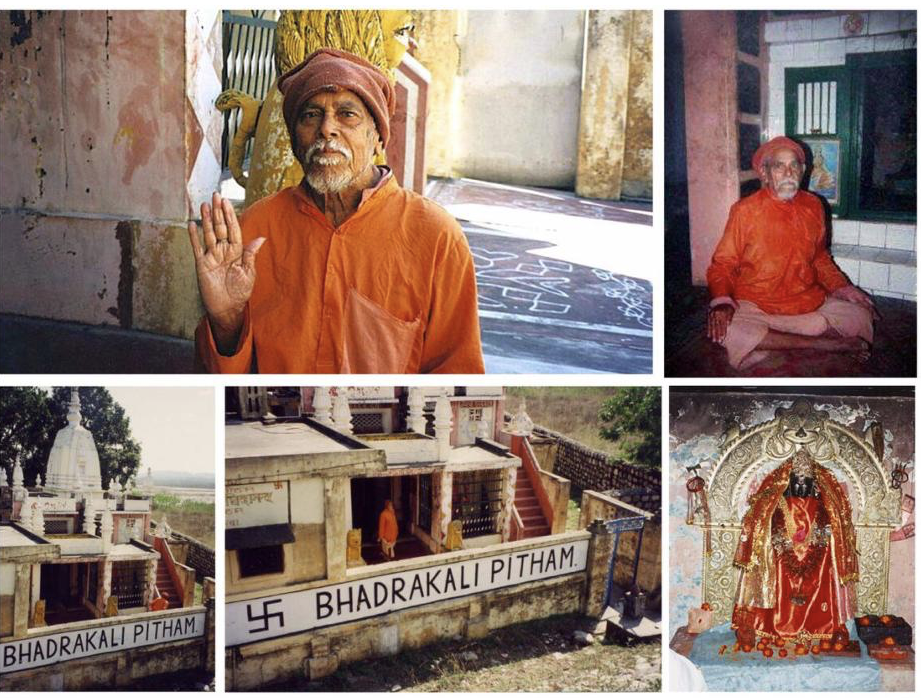
Śrī Kalyānānanda Tīrtha Saraswati
Born on the Brahmamuhurta of Vijayadashami in 1905, Venkateswara Rao Peddiraju was born to Sri Kondayya Peddiraju and Smt. Satyavati. Though he lived the early part of his life as an ordinary man, he was deeply knowledgeable in English, Telugu, Hindi, and Sanskrit. At the age of twenty-five, he married Sri Jalamma Garu, and the couple was blessed with two children, Rama Chandra Murthy and Katyayani. Until the age of forty, he worked as an assistant to a prominent lawyer before deciding to dedicate his life entirely to spirituality.
From a young age, Swamiji displayed a strong inclination toward spiritual practices. He was initiated into the Gayatri Mantra by his father during childhood and regularly performed daily homas with great devotion. Seeking higher spiritual realization, he eventually left his home and embarked on a spiritual quest, which first led him to the Ramana Ashram in Tiruvannamalai, Tamil Nadu. After several years of intense penance and spiritual discipline there, Ramana Maharishi advised him to proceed to the Himalayas for further sadhana.
Before beginning his Himalayan journey, Swamiji traveled to Varanasi, where he met his revered guru, Raja Rajeswarananda Natha Tirtha. His guru initiated him into sanyasa, bestowing upon him the kashaya vastra and dandi, symbolizing the ascetic life, and gave him the diksha name “Kalyanandanatha Tirtha.” Thereafter, Kalyanandanatha continued his spiritual penance in the Himalayas and eventually settled in Haridwar.
An important and unique chapter in Swamiji’s life was his encounter with the former Prime Minister of India, Smt. Indira Gandhi. During one of her visits to Haridwar, she met Swamiji and shared her personal concerns with him. Swamiji blessed her with a rudraksha mala. After later becoming the Prime Minister, Indira Gandhi sought him out again and wished to offer something in service to him. Swamiji expressed his desire to establish an ashram in Haridwar. A location was then chosen on the sacred banks of the River Ganga, opposite Brahma Varcas Peetham, where the Bhadrakali Peetha of Swamiji was eventually established.
Paramesthiguru...
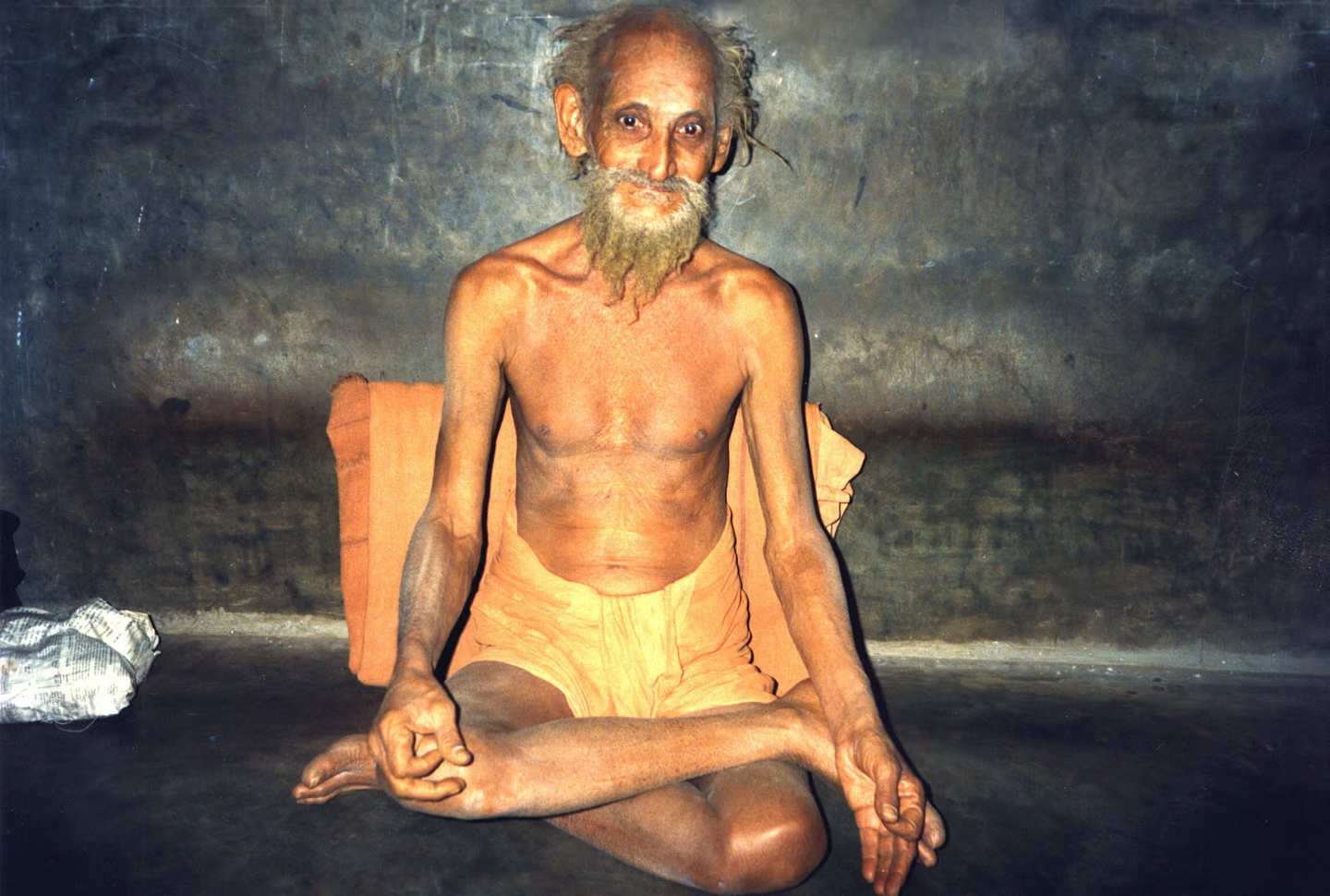
Sri Swaprakashananda Natha Saraswati
Swami Swaprakasananda Tirtha Hamsa Avadhuta, also known as Anakapalle Gurugaru was born to Mahalakshmi and Suribabu Kodukula, with the name of Narasimha Kodukula on July 31, 1915 in the village of Veduruparthi, Andhra Pradesh.
As a child, svami has habits of being in a deeply contemplative mood in opted solitude, going routinely into deep meditation most of the time,
Over the years, Gurugaru encountered many of the greatest spiritual teachers of his time and took initiation into many number of spiritual lineages.
During his 20th year, Sri Gurugaru received initiation from Sri Poornananda Yogi, a disciple of the Tibetan guru Maru Maharishi.
He was introduced to Śrī Vidyā upasana by Sri Kesari Kameswara Rao of the Madhvacharya lineage, and received initiation into the 10 Mahavidyas, Sri Rajarajeswari ,Vanadurga, and the] Saptasathi Chandi. He attained purna diksha [the highest initiation in Śrī Vidyā] from Sri Gnanananda Saraswathi of Anakapalle.
Traveling the all over India to enhance his spiritual knowledge, Sri Gurugaru mastered the 64 Tantras by the time he was 40 years old. By 43, he had learned 70 million mantras from the teachings of the 18 pīṭhams and many gurus.
He used to sleep in the night, and then quit the body, travel to mahasiddhas in the Himalayas, have discussion and then come back to his own physical body in the early morning.
By 1980, in his 65th year, Sri Gurugaru felt the urge to renounce the material world and take up sannyasa. To this end, he traveled to the Sri Bhadrakali Mahapeetam at Haridwar’s Saptarishi Sarovar. Sanyasa Diksha was showered on him by [Gurugaru’s final guru] Srilasri Kalyanananda Bharati Tirtha Maharaj. and offered all his mantra,tantra, upasana at his feet and took sanyasa.
Years later, with his Guru’s blessings, Sri Gurugaru took up the Avadhuta ashram.
The final step was, Avadhuta guru received final instructions and also some internal kriyas from kadambari baba in mental plane, which made him to completely become a jeevamuktha
swami Svaprākāśānanda passed away at 6 p.m. on Guru Purnima Day, Tuesday, July 23, 2002. He was just a week shy of 87 years old.
Amma was struck by Gurugaru’s ecstatic, almost childlike expression of joy. “His eyes were wide open,” she said. “There was still so much power in his facial expression.” There would be no further births for him, she concluded. “He is gone,” Amma said, categorically. “You should have seen his eyes.”
Paramguru...
Sri Amritananda Natha Saraswati
Sri Amritananda Natha Saraswati, born as Prahlada Sastry on September 26, 1934, in India to Nisthala Narasimha Rao and Lakshmi Narasayamma, showed a deep interest in the scriptures of Sanatana Dharma from a young age. At age eleven, he experienced his first profound spiritual state after witnessing a burst of divine light, an event that marked the beginning of his inner journey.
He completed a Master’s degree in Physics from Andhra University in 1956 and later worked at Tata Institute of Fundamental Research. In 1957, he married Annapurna Gunturu, and together they had three daughters.
A major turning point came in 1977 during a visit to Hyderabad, where he experienced a powerful vision of Lord Balaji as Bala Tripurasundari. This awakened intense spiritual experiences and led him deeper into meditation and Sri Vidya sadhana. Later that year, he met his guru, Śrī Swaprakashananda Natha Tirtha Hamsa Avadhūta, who initiated him into sacred mantras and gave him the name Amritanandanatha Saraswati.
In 1979, while teaching in Zambia, he accepted his first disciple, Haran Aiya, beginning his role as a spiritual teacher. Returning to Visakhapatnam in 1981, he received divine guidance to build a temple dedicated to the Divine Mother. This vision eventually became Devipuram.
After years of intense sadhana and devotion, he completed the construction of Sri Meru Nilayam, a unique Sri Chakra temple consecrated in 1994. Throughout his life, Guruji worked to make Sri Vidya accessible to everyone through simplified rituals and teachings rooted in devotion and inclusivity.
On October 10, 2015, Guruji attained Mahāsamādhi in Visakhapatnam. His legacy continues through Devipuram and the countless devotees inspired by his teachings.
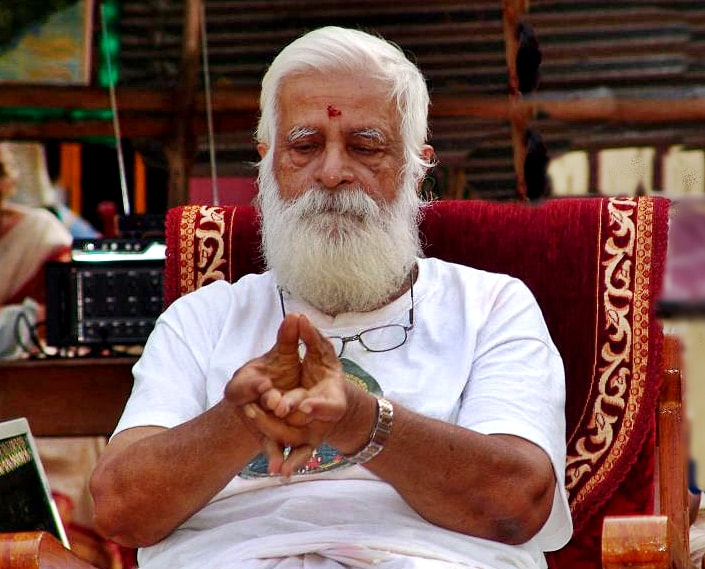
Sri guru
Sri Caitanyananda Natha Saraswati
Sri Caitanyananda Natha Sarasvati (Haran Aiya), affectionately known as Haran Aiya, is a respected spiritual teacher in the Śrī Vidyā and Tantra traditions. Originally from Sri Lanka, he became known for his deep devotion, humility, and dedication to preserving and teaching the sacred practices of Śākta worship and the Śrī Cakra tradition. According to accounts from his disciples and associated spiritual communities, he was ordained within the lineage connected to Sri Amritananda Natha Saraswati and later guided many seekers in spiritual practice and ritual worship.
Haran Aiya is especially admired for making complex spiritual teachings accessible to ordinary devotees. Though not born into a traditionally orthodox background, he developed a profound love for Tamil devotional literature, mantra śāstra, and the worship of the Divine Mother. His students often describe him as compassionate, disciplined, humorous, and deeply devoted to bhakti (devotion).
He also contributed to the preservation of ritual traditions through books and manuals on Śrī Vidyā worship, including works related to Śrī Cakra pūjā and Pratyangira worship. Many disciples and practitioners in the global Śrī Vidyā community continue to study his teachings and honor him as a guru who combined traditional wisdom with practical spiritual guidance.
Today, Haran Aiya is remembered as a sincere teacher whose life emphasized devotion, discipline, guru-bhakti, and the transformative power of the Divine Mother’s grace.
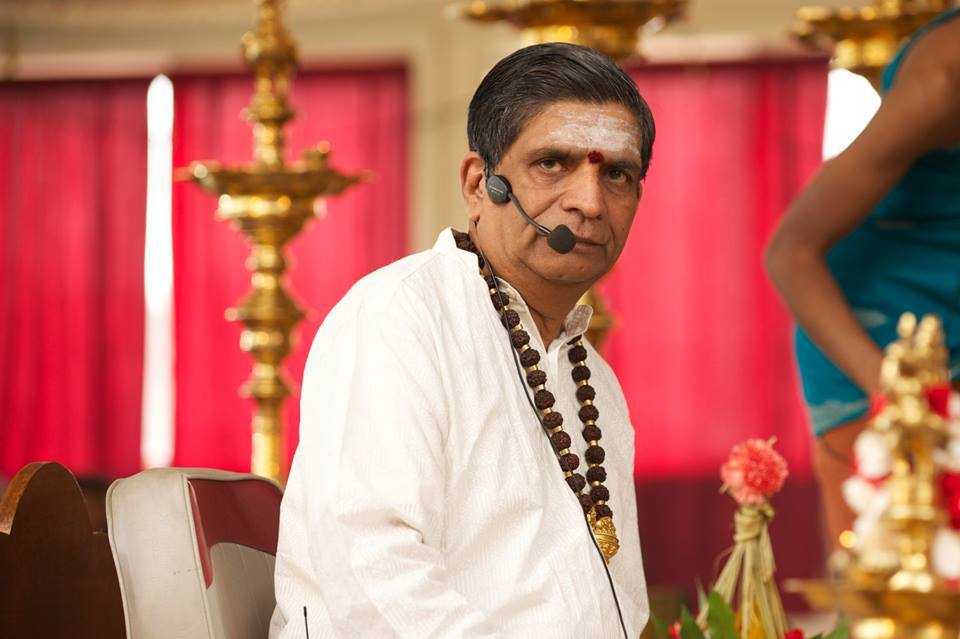
Sri Tejomayananda Natha Saraswati
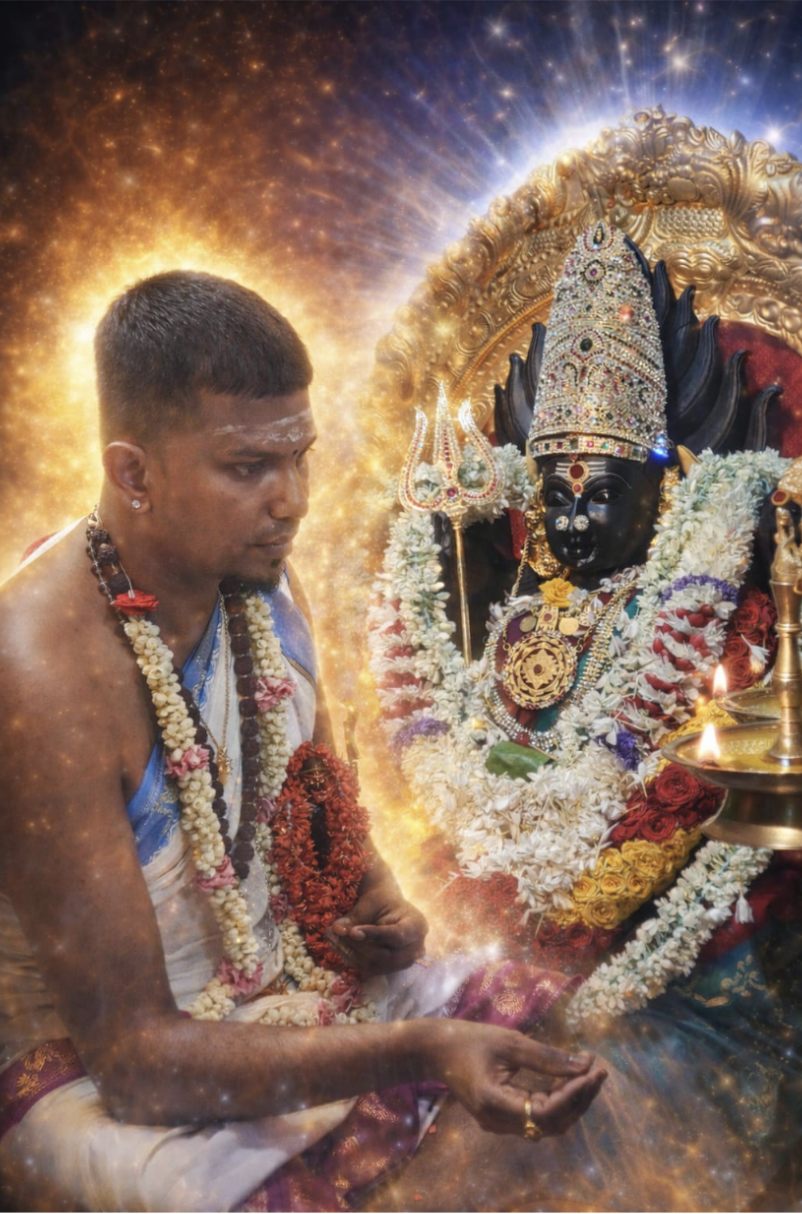
From a young age, Saravanan (Annā) experienced deep spiritual visions and a strong connection to the Divine Mother, which led him onto the path of Devi Upasana. Over the years, he received initiations in Third Eye practices, Kali Mantra, Kundalini Yoga, and later the sacred Sri Vidya tradition under Chaitanyananda Natha Saraswati. Guided by profound spiritual experiences and divine revelations, including a life-changing mystical encounter with Jagadguru Sri Katambari Babaji, Annā was inspired to dedicate his life to Devi worship and service to humanity. In 2013, together with his cousin and spiritual brother Shashedearan, he established Simhapuri Shakti Peedam and consecrated a granite murti of the Devi through Maha Kumbabishegam. Professionally a nurse and a graduate of the National University of Singapore, Annā has devoted many years to Sri Vidya Sadhana, conducting poojas, homams, meditation sessions, and spiritual workshops in Singapore.
In 2023, he received Poorna Deeksha and the spiritual name Sri Tejomayananda Natha Saraswati, continuing his mission to spread the wisdom of Sri Vidya and serve humanity through the grace of the Divine Mother and his Gurus.